
STILLPOINT TRAVELS
Travel that forms perspective.
Exclusively Europe. Deeply curated.
WHY STILLPOINT
The name comes from two places at once.
The first is T.S. Eliot’s Burnt Norton:
The second is 1 Kings 19:
Both point toward the same thing — the moment underneath the noise. The encounter you came for, even if you didn’t know it when you booked the flight.
“At the still point of the turning world… there the dance is.”
The prophet Elijah on the mountain, waiting for God through wind, earthquake, and fire. God is in none of them. Then, he hears a still, small voice.
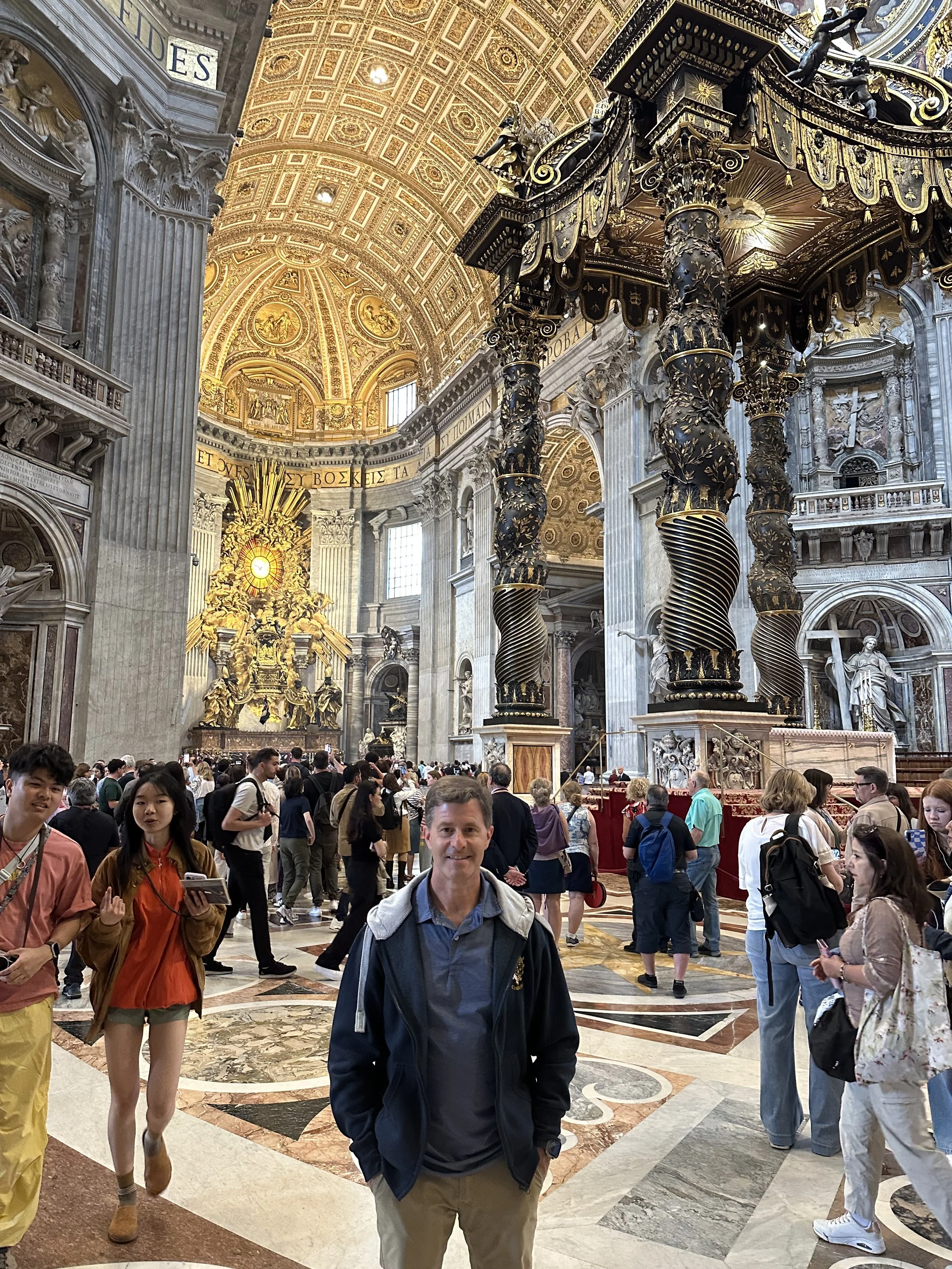
There are moments in travel when everything slows — when a place demands attention.
Those still points stay with us. They shape how we understand history, beauty, and even ourselves.
That is the kind of journey I design.
Inside a Cathedral
On a quiet river at dusk
After the museum crowd thins.
WHY EUROPE
In Europe, history isn't behind glass. It's in the stone of the cathedrals, the layout of the cities, the paintings still hanging where they were first hung four hundred years ago.
My relationship with the continent goes back to studying at Gonville & Caius College, Cambridge. Something happened there — standing inside centuries-old architecture, walking streets the Plantagenets walked, feeling a weight of history that simply doesn't exist back home. I backpacked through Asia afterward, and came back more convinced than ever that Europe was my place.
The Crusades, Moorish Spain, Roman England, the great cathedrals — I'm not just interested in European history. I'm formed by it.
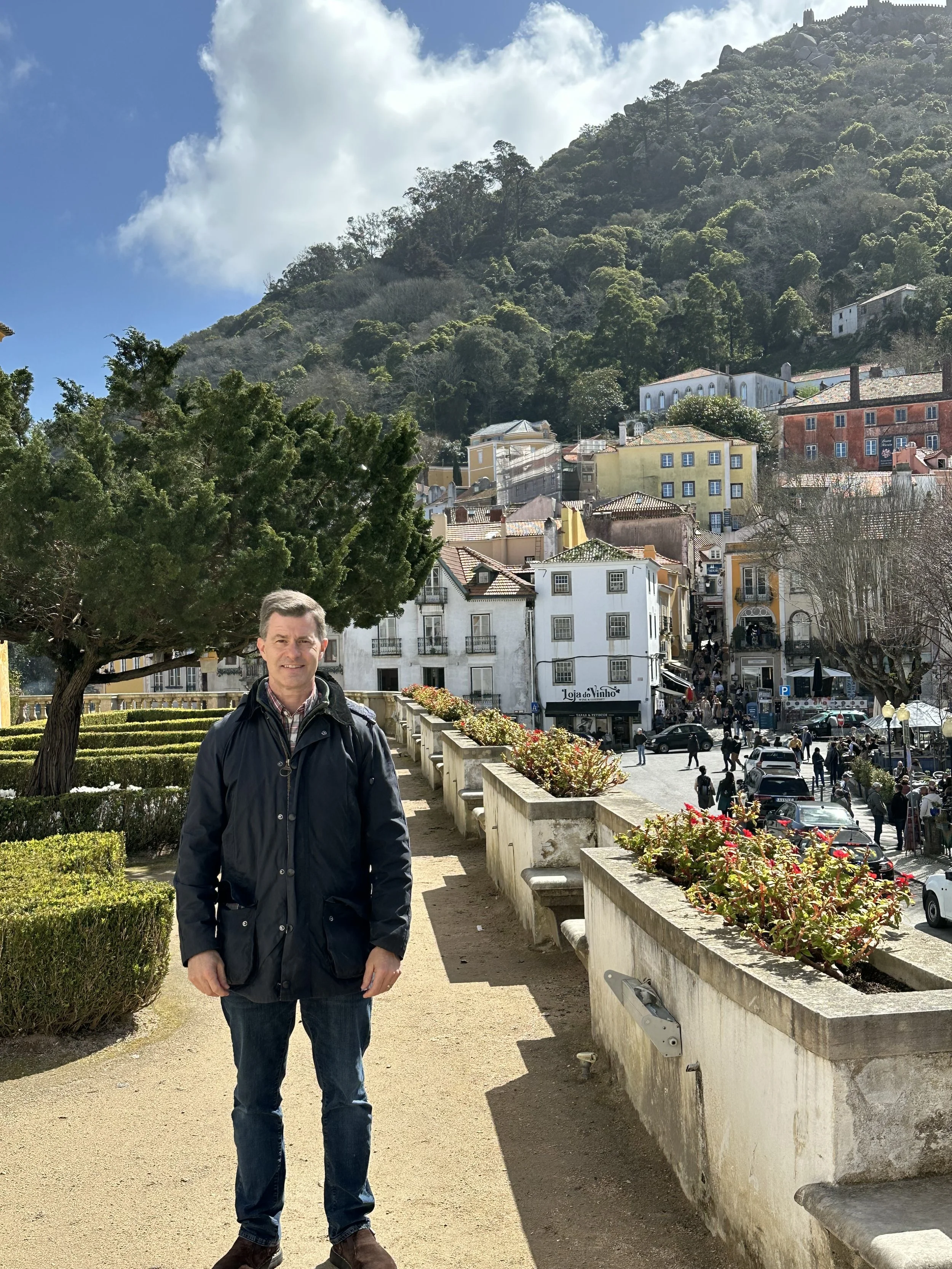
I've found the still point in places I expected, and plenty I didn't: a quiet cloister in Lisbon early enough to have it to yourself; a long lunch in a Spanish town whose name you'll forget by the time you're home; the walk out of a Paris restaurant into empty, lamplit streets, no agenda, just the city; a train window somewhere between two countries when the conversation finally goes quiet.
Beauty changes people. History humbles them.
Attention is where both begin
MY BACKGROUND
Every good journey I've taken changed me a little. Eventually I decided that was worth building a life around.
I spent a decade being paid to notice details and manage risk — it turns out that is most of what planning a trip actually is. Before becoming a travel advisor, I practiced litigation for over ten years, most recently as in-house counsel at FedEx Trade Networks. That work trained me to prepare carefully, anticipate friction, and exercise steady judgment when details matter. Those habits now shape how I design travel.
I stepped back from law to raise our two sons. Some of our best conversations have happened after long days walking European streets — on trains between cities, or back at the hotel when everyone is finally tired.
Those shared moments matter. They are still points.
And they are the reason I believe travel, done with intention, can change a family. The advisory grew naturally out of that — from the planning I loved, the trips we took, and the conversations that followed when people came home wanting the same thing.
Who I Work With
I design journeys for people who take travel seriously:
Families — who want their children to encounter history, beauty, and scale before the world narrows them.
Empty nesters — who've waited long enough and are ready to go deep. Who want the trip they always imagined, done properly.
Grandparents — who want to give their grandchildren a week in Europe and a bond built slowly, in person. Sometimes the whole family comes along (multigenerational travel); sometimes it's just grandparent and grandchild, parents left happily at home (what's come to be called skip-gen). I plan both, and the pacing that makes each one work.
Gay couples — who want to travel with an advisor who sees them fully and plans accordingly, without caveat or asterisk.
Singles — who are done waiting for someone to go with, and know that solo travel, done well, is its own kind of profound.
What my clients share isn't a life stage. It's a disposition — depth over speed, meaning over itinerary, presence over documentation.
You don't need everything mapped out.
Share what you're considering. A city, a season, a question. We'll explore it together.